
Everything you need to know about Clean Advertising in 2025
Think about a piece of graffiti or street art. It’s eye-catching and bold, but it’s permanent (not to mention illegal). Reverse graffiti has all of the same attractions, but it’s CLEAN. Literally.
When we create a Clean Ad, we use high-pressure water to clean the pavement through a stencil, in the shape of your artwork, leaving a clear message. Not only are you increasing your brand awareness, but you’re doing it without adding anything to a surface, only removing what shouldn’t be there.
We’re in an era where consumers are becoming increasingly conscious of sustainability, and therefore, brands are under pressure to rethink the way that they advertise. Billboards and digital screens may still dominate the high streets, but reverse graffiti is the up-and-coming, eco-friendly alternative. Low energy use and high impact - what’s not to love?
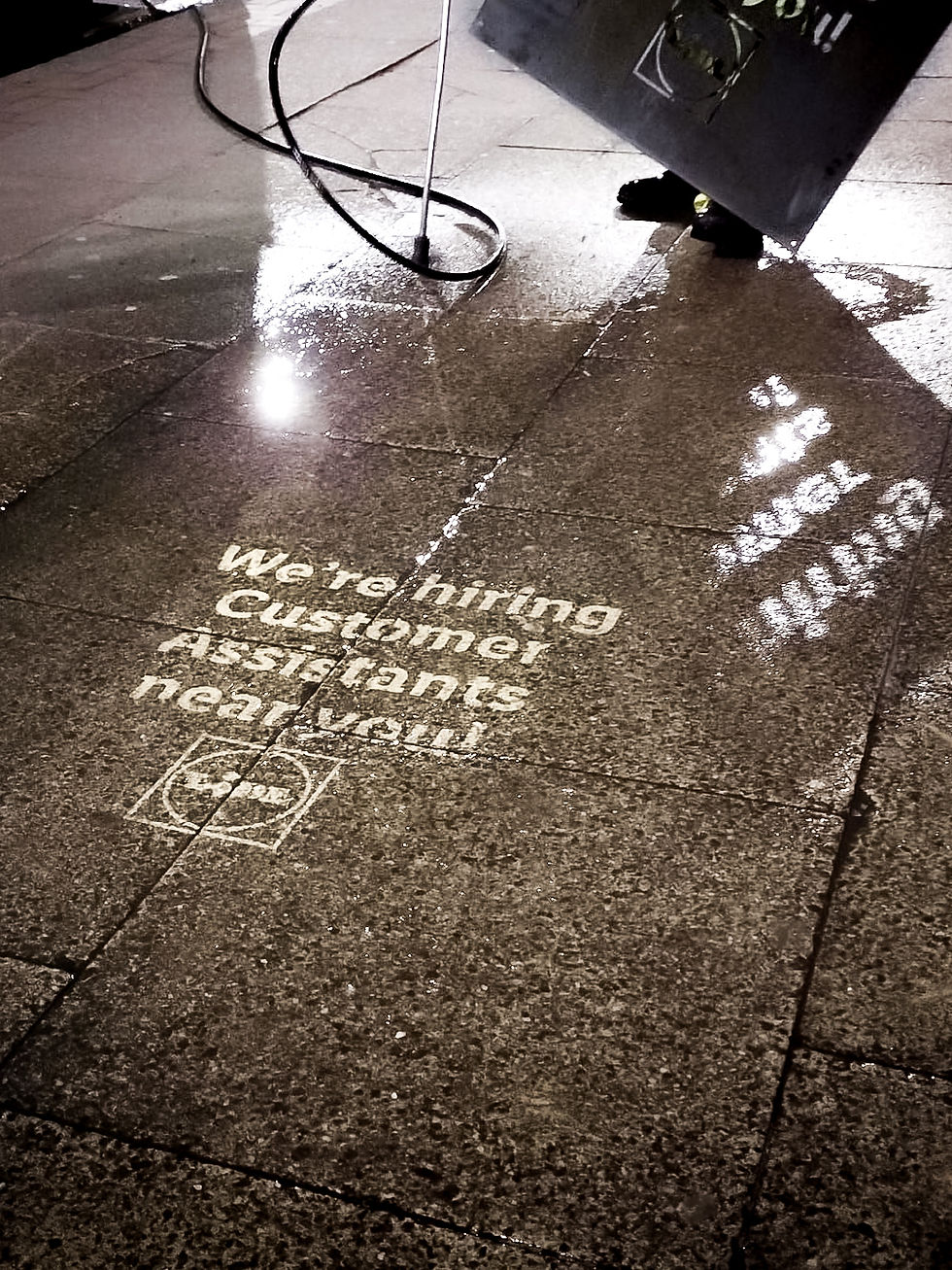
A reverse graffiti campaign creates virtually no carbon footprint beyond the small amount of water and energy needed for cleaning. For any brand looking to demonstrate its ethics and sustainability, this is a way to show commitment to consumers - by leaving a space in their community cleaner than it was before.
Plus, people are becoming increasingly selective about what they engage with. They block digital ads, scroll past sponsored posts, and turn a blind eye to posters and basic billboards. But there’s a novelty to spotting a clean ad on a pavement. It makes people look twice, or even take a photo. Clean Ads can be spotted by a consumer while they are simply walking with their head down, actively avoiding engaging with other traditional forms of advertising.
The temporary nature of reverse graffiti also gives your brand flexibility. A Clean Ad campaign can be targeted at a particular season, event, or product launch, then naturally fade away without any removal costs. Unlike posters or billboards that require printing, installation, and disposal, clean ads are quick to apply and leave no waste behind.
Because clean advertising is still relatively uncommon, it has that quality that makes people stop and look. Reverse graffiti still has an unconventional feel that catches a passing pedestrian’s eye. But, importantly, we achieve this impact without leaving behind waste or damage. Instead of adding clutter to public spaces, like discarded flyers or half-disintegrated posters, it removes the dirt that should never have been allowed to build up in the first place!
And because we’re simply cleaning the streets, reverse graffiti is NOT vandalism. No harm or permanent markings are left by Clean Advertising campaigns.
Of course, reverse graffiti won’t replace every form of advertising, but as part of a wider strategy, it can be a really powerful talking point and a memorable experience for consumers. It shows originality, creativity, and that your brand is considering its impact on the environment.
If you’re looking for a way to stand out from competitors, advertise sustainably, and engage directly with consumers at street level (literally), then choosing to run a reverse graffiti campaign might be the smartest investment you make in 2025.
